Notion: the memo, the near-collapse, and a year in Kyoto
Ivan Zhao wanted everyone, not just programmers, to shape their own tools. It took a failed first version, a company cut to two people, and a year of rebuilding in Japan.
By Matt Wagner4 min read
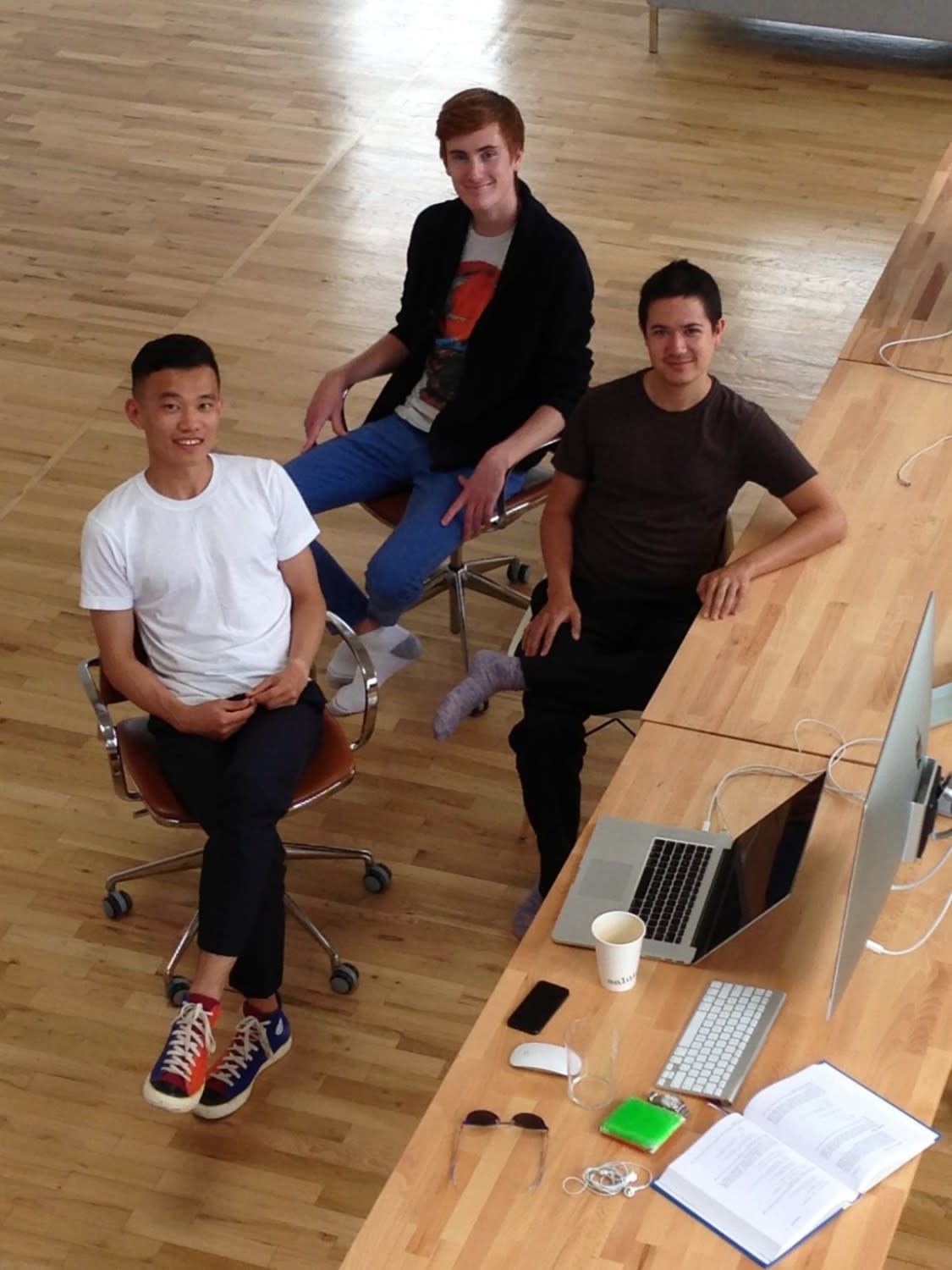
Cofounders Ivan Zhao and Simon Last with early teammate Toby Schachman in an early Notion office. Photo: Notion
In this story7 sections
Most people know Notion as the tidy app where teams keep their docs, wikis and project plans. Fewer know that in 2015 it was two people, a broken app, and money borrowed from family. This is how it got from there to more than 100 million users, and what that history tells you if you are deciding whether Notion fits your team.
2013
It started with an audacious vision
Before there was a product, Ivan Zhao wrote what he now calls Notion's founding memo. Under the heading "My Goals" it says he wants "to change the current sorry state of personal computing" by letting "everyone, not just programmers" create digital things of their own.
My Goals
... to change the current sorry state of personal computing ... everyone, not just programmers ...
Years later he put it more simply: the idea was to "let everyone, not just programmers, shape their own tools for thought." In 2013, he and Simon Last started Notion to do it.
See how Notion fits your team
Tell Otis what your team needs and Juukbox lists matching products in order of best fit.



Most people didn't understand the first version
The first Notion was a tool for building software without writing code. It was ambitious, and it didn't land. Ivan has said the product "was not understandable for most people." In the same breath he was blunter: "Nobody wakes up wanting to make software. Well, very few people."
“Nobody wakes up wanting to make software. Well, very few people.”
So they kept the power and changed the wrapper. Ivan compared it to how you sugarcoat broccoli: hide the tool-making inside something people already use every day. Simon's answer to what that was: documents.
So they hid the power in a familiar doc
A Notion page looks like a plain document. Underneath, every line is a block. Type a line, then turn it into a checklist, a heading, or a whole page tucked inside it. The same blocks let a team build its own project tracker, wiki or meeting notes without asking an engineer.
That is still the core idea today. Every item in a Notion database is itself a page, so a task can hold the full spec, the notes and the discussion right inside it.
2015: everything rides on one rewrite
The new version was built on a Google web framework that kept crashing. "Bugs came from everywhere," Ivan recalled. "People were losing their content." At the same time the money was running out.
Ivan and Simon made the hard call to let their colleagues go. A team of about five became two. They sublet their San Francisco apartments and their office, and Ivan borrowed $150,000 from his mother to bridge the gap.
They decided to start over on a sturdier foundation, the React libraries, and to do it somewhere cheaper than San Francisco.

A year of rebuilding in Kyoto
They picked Kyoto, a city neither had visited, almost on a whim. Neither could read Japanese, though Ivan, who is from China, could make out enough of a menu to tell beef from chicken. The days had one rhythm. "We were just, code, code, code," Ivan said. "Then, 'Hey, let's go out for food.' Then, we go eat, go back to work, and do it again."
“We were just, code, code, code”
The new code went into a repository they called notion-next. In 2024, Ivan wrote, it was still the main one. Everything rode on that rewrite.
2016
Then it caught fire
The rebuilt Notion 1.0 launched on Product Hunt in 2016. The real turn came in 2018 with Notion 2.0, which added databases. "The breakthrough came with Notion 2.0," Ivan wrote, "when we added general-purpose databases."
After that, users took charge. They filmed "How I use Notion" videos, translated the user guide into Korean when it only existed in English, and built businesses selling templates. Some sellers made $1 million in 2023. By 2024 Notion counted more than 100 million users.
2026
Today, AI writes half its pages
In November 2026 Ivan wrote that roughly half the pages in Notion are now created by AI agents. The memo wanted everyone making their own tools. Now software is helping them do it.
It also took longer than planned. The original pitch deck imagined 15 months. In Ivan's words, "it took us 10 years."
“it took us 10 years.”
The tool in this story
More stories
Questions to ask before choosing Notion
Do you need deep project tracking, or docs with tasks?
Notion's boards and timelines live inside pages. If you plan resources or heavy dependencies, test those first.
How much AI work do you want it to do?
Notion Agent is included in the Business plan ($20 a person a month, billed yearly), and Notion says agents now create about half of its pages. Custom agents and heavier use run on Notion Credits, and Notion's AI pricing has changed three times since 2024, so check today's plan.
What does your team already use?
Notion connects with tools like Slack, Jira, GitHub and Google Drive. Check that the ones you rely on are covered.
See how Notion fits your team
Tell Otis about your team and Juukbox builds a space with matching products in order of best fit, Notion included.
Notion isn't a sponsor of Juukbox and didn't pay for this story.
Sources
- The Next Era of Notion, Notion (Ivan Zhao)
- Notion's founding memo (archived), ivzhao.com via the Internet Archive
- 100 Million of You, Notion (Ivan Zhao)
- Augmenting Human Intellect, No Code Required, Sequoia Capital
- First Block with Notion Co-Founders Ivan Zhao and Simon Last, Notion
- Inside Notion: Ivan Zhao, Lenny's Podcast
- $10 billion productivity startup Notion wants to build your AI everything app, Forbes
- Intro to databases, Notion Help Center
- Notion pricing, Notion
- Using database views, Notion Help Center
- Integrations, Notion
- Slack, Notion
- Jira, Notion
- GitHub, Notion
- Google Drive, Notion